
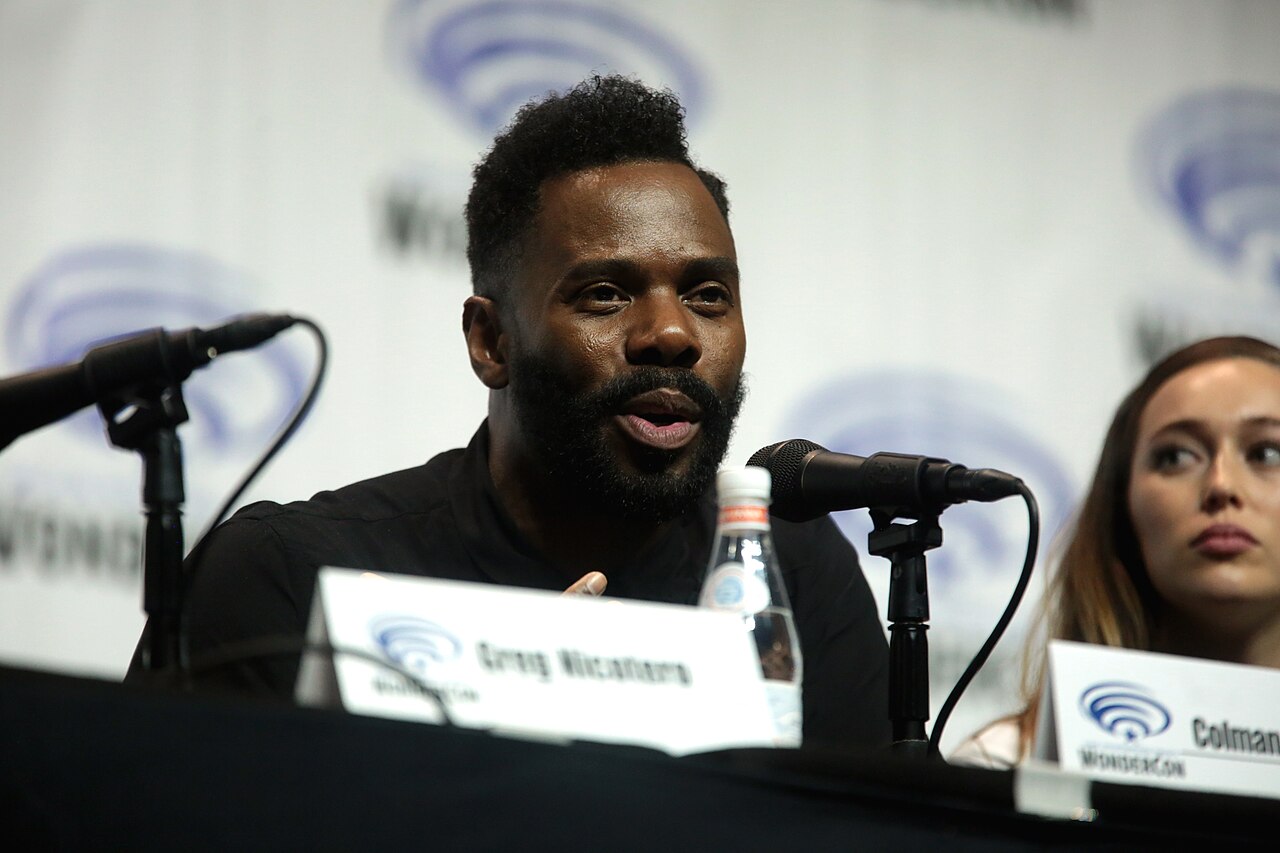
Watch or listen to the episode
"Colman Domingo"
Full original episode. Highlights below summarise the discussion; claims and opinions are attributed to the speakers.A wide-ranging SmartLess conversation
In SmartLess’s “Colman Domingo” episode, Domingo reflects on his decades in theatre, film and television. The conversation covers his uncertain start as an artist, years of financial insecurity, intensive preparation for roles, expansion into directing and adjustment to greater public recognition. This account is based solely on the podcast conversation and has not been independently corroborated.
A teacher’s challenge opened the door to acting
Domingo recalls being shy while studying journalism at Temple University. After his mother encouraged him to take a class that would draw him out of himself, he chose acting as an elective. He says a teacher identified a potential gift and challenged him to pursue it, prompting Domingo to take additional theatre classes and discover that he wanted a life onstage.
That discovery did not bring immediate financial security. Domingo describes racing from an Off-Broadway curtain call to a bartending shift and continuing to pick up side work even while appearing on Broadway. He estimates that he maintained other jobs for roughly 20 years, partly because he feared his acting work would not last.
He nearly left the industry before a major turn
Domingo says that, in his mid-40s, a succession of unsatisfying auditions and limited opportunities left him feeling disrespected and ready to abandon the entertainment industry. He considered turning his side business as a headshot photographer into his main career, but a friend persuaded him to meet new managers. After changing representation, he says he booked Fear the Walking Dead and Baz Luhrmann’s The Get Down within about a month.
He selected Fear the Walking Dead because the role seemed like the stranger and more intriguing choice. Domingo says he remained with the series for eight seasons and expanded into directing and producing during his tenure. He credits executive producer Gayle Ann Hurd with encouraging him to explore television directing; he then shadowed directors and learned about lenses, lighting, preparation and visual storytelling.
Preparation creates room for imperfection
Domingo describes acting as a service rooted in curiosity about why people behave as they do. When portraying troubling characters, he says he looks for their motivations and humanity rather than approaching them as simple villains. He applied that method to Joe Jackson, researching his life and speaking with family members while seeking a more complicated perspective for the performance.
His preparation is intensive but intended to preserve spontaneity. Domingo says he may rehearse alone for the equivalent of a 40-hour week and memorise about 90% of a script before filming. On set, however, he wants to remain responsive to fellow actors. Rather than chasing a fixed, polished result, he says he strives for imperfections that make the work feel raw and alive.
Later success brought privacy and perspective
Discussing recognition later in his career, Domingo says Euphoria gave him material written with his particular abilities and uncertainties in mind, while projects such as Rustin allowed him to contribute more deeply to the creative process. Greater visibility also led him to seek more privacy at home, although he says he remains grateful when viewers approach him warmly.
At 56, Domingo describes entering what an older acquaintance called a “truth-telling season”: a stage when declining something no longer requires an elaborate justification. He also says he is learning to accept physical changes and visible imperfections as part of ageing. That reflection prompted a broader discussion among the participants about growing older, including a host’s appreciation of laugh lines as evidence of a life containing plenty of laughter.