Money and rallies define Trump’s campaign push
President Donald Trump’s political operation put substantial resources behind Republican candidates seeking to retain control of Congress. O Globo reported that Trump was using $277 million raised by his principal super PAC to support the party’s candidates. Dawn reported separately that Trump was campaigning across multiple states ahead of the Nov. 3 elections, with Republican majorities in Congress at serious risk.
Other reporting described electoral pressure on the president and his party. La Nacion cited a Washington Post-ABC News-Ipsos poll that put Trump’s approval rating at 33%. It reported that concern about living costs and the war with Iran was weighing on Republicans. CNN reporting carried by Local News 8 said Trump had two weeks to try to preserve the party’s congressional majorities, while some advisers and allies were preparing for the possibility of defeat.
Georgia contests put Trump’s record at the centre
Georgia’s Senate and governor’s races became prominent tests of Trump’s influence, according to ABC News. Democrats were trying to associate their Republican opponents with the president’s positions on the economy and the war with Iran, two issues also identified by La Nacion as liabilities for the party in its report on national polling.
Trump appeared at a north Georgia rally supporting Representative Mike Collins, who is challenging Senator Jon Ossoff. The Guardian reported that Trump said Ossoff did not represent the state’s values and falsely portrayed his election as illegitimate. The president also repeated his unsupported allegation that Georgia’s 2020 election was fraudulent.
Dawn’s account of Trump’s wider rally campaign described familiar attacks on opponents and another evidence-free assertion that he won the 2020 election. The report also examined uncertainty among some supporters over who could reproduce Trump’s rally style once he leaves office, while identifying Vice-President JD Vance as one figure some attendees viewed as a possible successor.
Democrats make their House case in Ohio
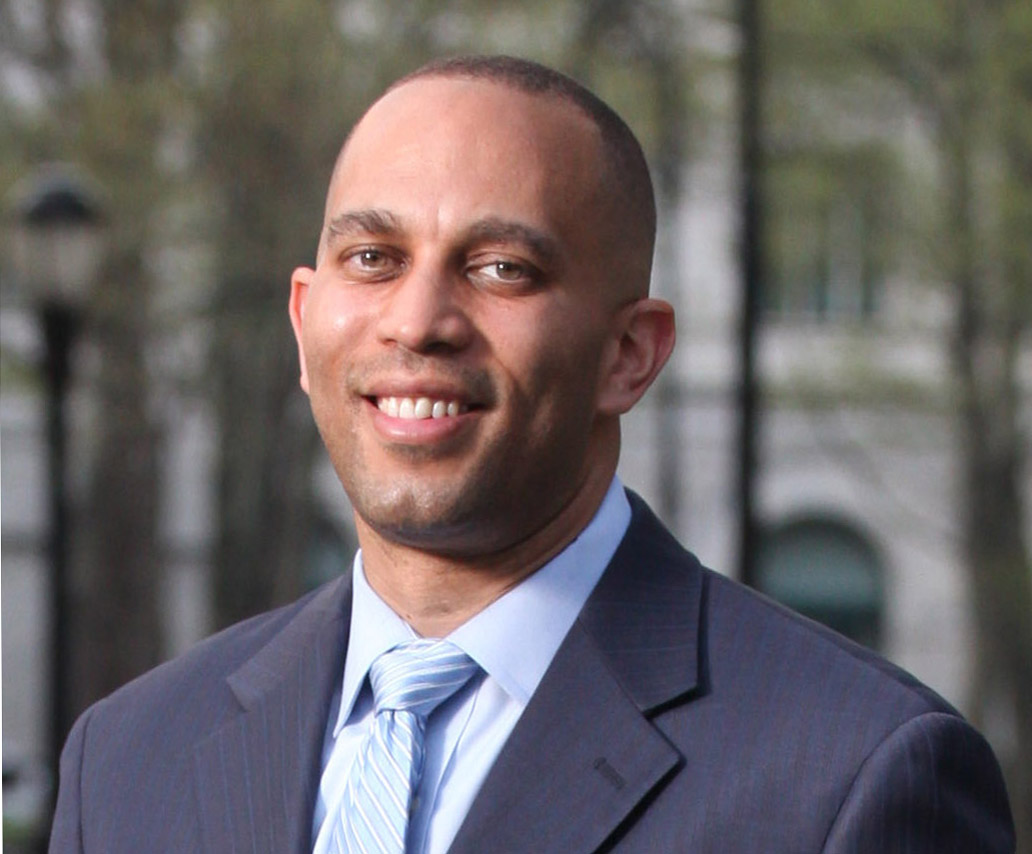
House Democratic leader Hakeem Jeffries joined Representative Marcy Kaptur’s campaign in Ohio on Sunday. WTOP reported that Jeffries expressed confidence in the party’s position in the House contest while supporting Kaptur in a closely fought district considered important to majority control. He also criticised Trump’s abrupt waiver of sanctions, though the report excerpt did not identify the sanctions or provide further details about the decision.
The Ohio appearance and the reporting from Georgia showed Democrats using different elements of Trump’s record in pivotal contests. Georgia Democrats focused on the economy and Iran war, while Jeffries presented the electoral climate as stable for his party and challenged a presidential policy decision. The reports did not establish how voters responded to those arguments.
Donors and litigation enter state campaigns
In Texas, Elon Musk formally endorsed Republican Ken Paxton in the Senate race. KXAN reported that the endorsement followed several weeks in which Musk had financed Paxton’s campaign, placing a prominent technology executive and donor directly into the contest.
KQED reported a separate influx of money from Silicon Valley into California contests below the federal level, including an Assembly race in the North Bay. Its report also said the Justice Department had filed a lawsuit concerning California’s elections several weeks before Election Day. The available account did not detail the legal claims, and it did not link the Assembly race to the struggle for control of Congress.
Maine and Wisconsin expose campaign tensions
A Republican-aligned advertisement caused an unusual dispute within the Maine Senate campaign. The Portland Press Herald reported that the Senate Leadership Fund aired an attack on Democrat Troy Jackson, who was seeking to replace Graham Platner as his party’s nominee. Republican Senator Susan Collins’ campaign called for the advertisement to be withdrawn. The commercial’s song made a personal allegation involving Jackson’s family.
In Wisconsin’s governor debate, Democrat David Crowley repeatedly sought to connect Republican Tom Tiffany to Trump, according to Wisconsin Watch. Tiffany argued for tax reductions financed from the state’s reported $3 billion surplus. The candidates also disputed abortion policy and private-school vouchers, making Trump one part of a debate that included several state-level issues.
The campaign strains were not limited to disputes between the parties. CNN reporting published by Local News 8 described an intense internal struggle among Trump’s advisers and allies over what might follow a Republican defeat. That reported uncertainty sat alongside Trump’s continued rallies and super-PAC spending, with the outcome of the Nov. 3 congressional contests still to be determined.