
Findings
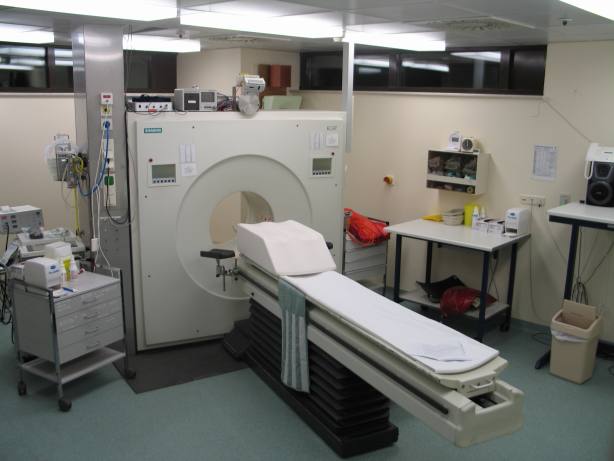
Researchers evaluated scandium-44 and a scandium-43/44 mixture using a long axial field-of-view PET/CT scanner and a standard NEMA IEC body phantom. This was a laboratory imaging study, not research in patients. The team assessed contrast recovery, image noise and bias under different reconstruction settings, including iteration numbers and absolute versus relative scatter correction.
The researchers reported that quantitative performance for both scandium preparations was comparable to fluorine-18. They said the scanner vendor’s prompt-gamma correction reduced additional random coincidences and errors in the phantom’s lung region associated with prompt-gamma emission. An isotope-specific point-spread-function correction, based on simulated positron ranges, reportedly improved contrast recovery.
Bias for scandium-44 met the cited EARL acceptance criterion for non-standard radionuclides, while bias for the scandium-43/44 mixture exceeded it. The authors attributed the latter result to mixture-specific cross-calibration of dose calibrators rather than PET imaging, but the abstract alone does not independently establish that explanation.
Why it matters
Scandium-43 and scandium-44 are positron emitters being explored for imaging alongside therapeutic scandium-47. Their prompt-gamma emissions and relatively high positron energy can complicate quantitative PET measurements. If the reported phantom performance is reproducible, long axial field-of-view systems and isotope-specific reconstruction could support more consistent measurement and protocol development. The study does not demonstrate clinical benefit, diagnostic accuracy or improved patient outcomes.
What remains uncertain
This report is a preprint and has not been peer reviewed. The supplied abstract gives no patient sample, replicate count, uncertainty intervals or numerical effect sizes, so the magnitude and precision of the reported improvements cannot be assessed. It also does not provide enough detail to judge generalisability across scanners, activity levels, acquisition conditions or clinical settings. Human studies and fuller methodological reporting would be needed before drawing conclusions about clinical utility.