
Findings
Autonomous navigation without Earth-based tracking remains challenging for spacecraft operating between Earth and the Moon. In this preprint, which has not been peer reviewed, researchers propose using the times when a spacecraft enters or leaves partial or total shadow as supplementary navigation measurements. These eclipse events can be identified from standard onboard power telemetry, so the proposed approach does not require dedicated new hardware.
The researchers formulated penumbral and umbral entry and exit times as constraints at the boundaries of calculated shadow cones. The cones were computed from planetary ephemerides, and an unscented Kalman filter incorporated the eclipse observations into estimates of the spacecraft’s state. Measurement uncertainty was derived from factors omitted by the spherical-body model, including telemetry sampling, Earth’s atmosphere, and the topography or oblateness of the occulting body.
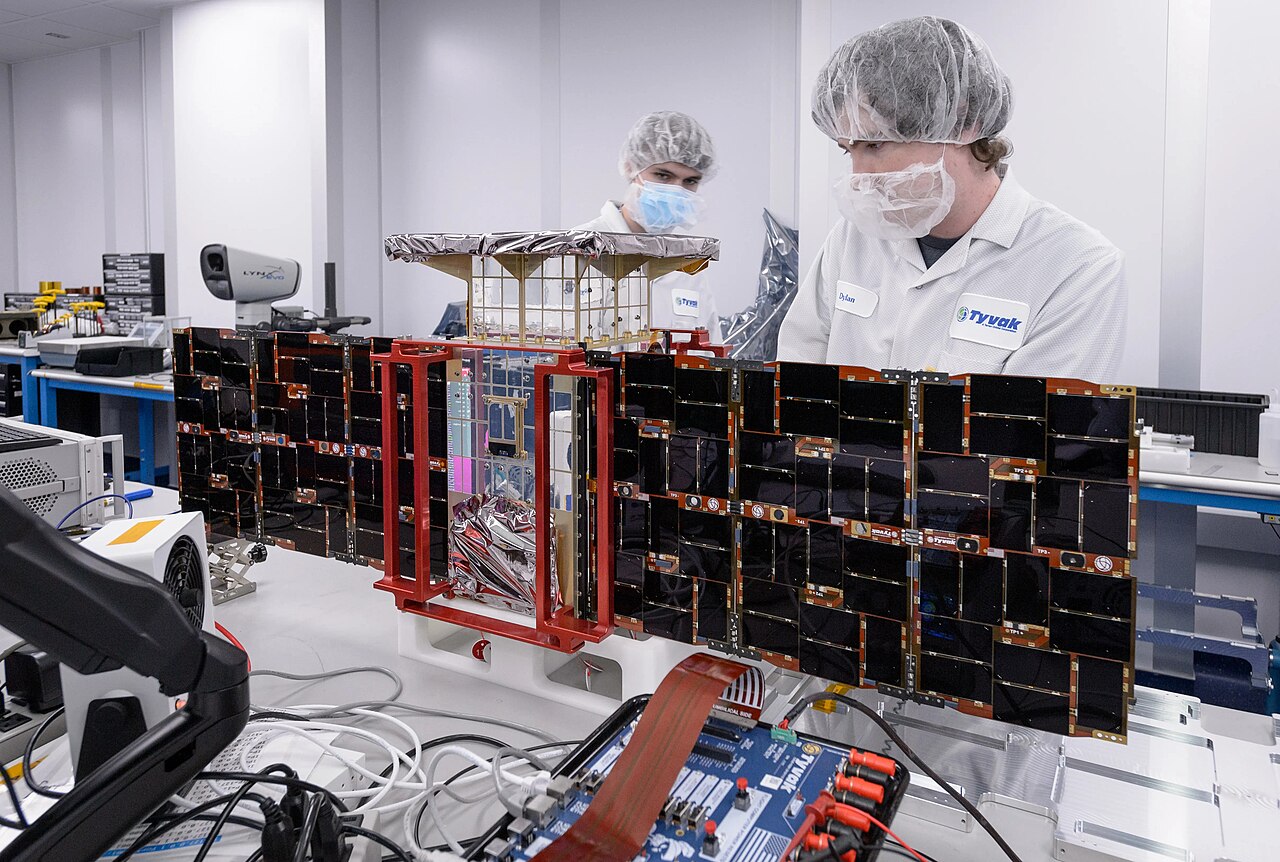
The approach was demonstrated in a simulation of an L1 halo orbit and with CAPSTONE spacecraft telemetry and orbit-determination products from the January 2026 lunar eclipse. According to the researchers, umbral contacts identified directly from CAPSTONE’s power telemetry agreed with calculated geometric contacts to within one telemetry sample interval. In both demonstrations, eclipse timing showed utility in reducing state-estimation uncertainty, particularly when the initial solution was degraded.
Why it matters
If further validated, eclipse contacts could provide an opportunistic supplement to navigation when a spacecraft naturally passes through a planetary or lunar shadow. Because the signal is drawn from existing power telemetry, it may supply additional information without new sensors. The reported findings do not show that eclipse timing can replace Earth-based tracking or independently support a complete operational navigation system.
What remains uncertain
The abstract does not report the numerical reduction in state-estimation uncertainty, the telemetry sampling interval, error distributions, filter settings, or performance across multiple spacecraft and eclipse geometries. It also provides no formal sample size; the flight demonstration described concerns CAPSTONE data from one named eclipse. The magnitude and practical significance of the reported improvement therefore cannot be assessed from the abstract alone.
The CAPSTONE contact-time agreement is an observation, whereas broader navigation performance is supported partly by simulation. The abstract does not establish how robust the method would be across different telemetry quality, spacecraft designs, trajectories, lighting conditions, or modelling errors. Because this is a preprint and has not been peer reviewed, its methods and conclusions have not yet undergone that stage of scrutiny.