
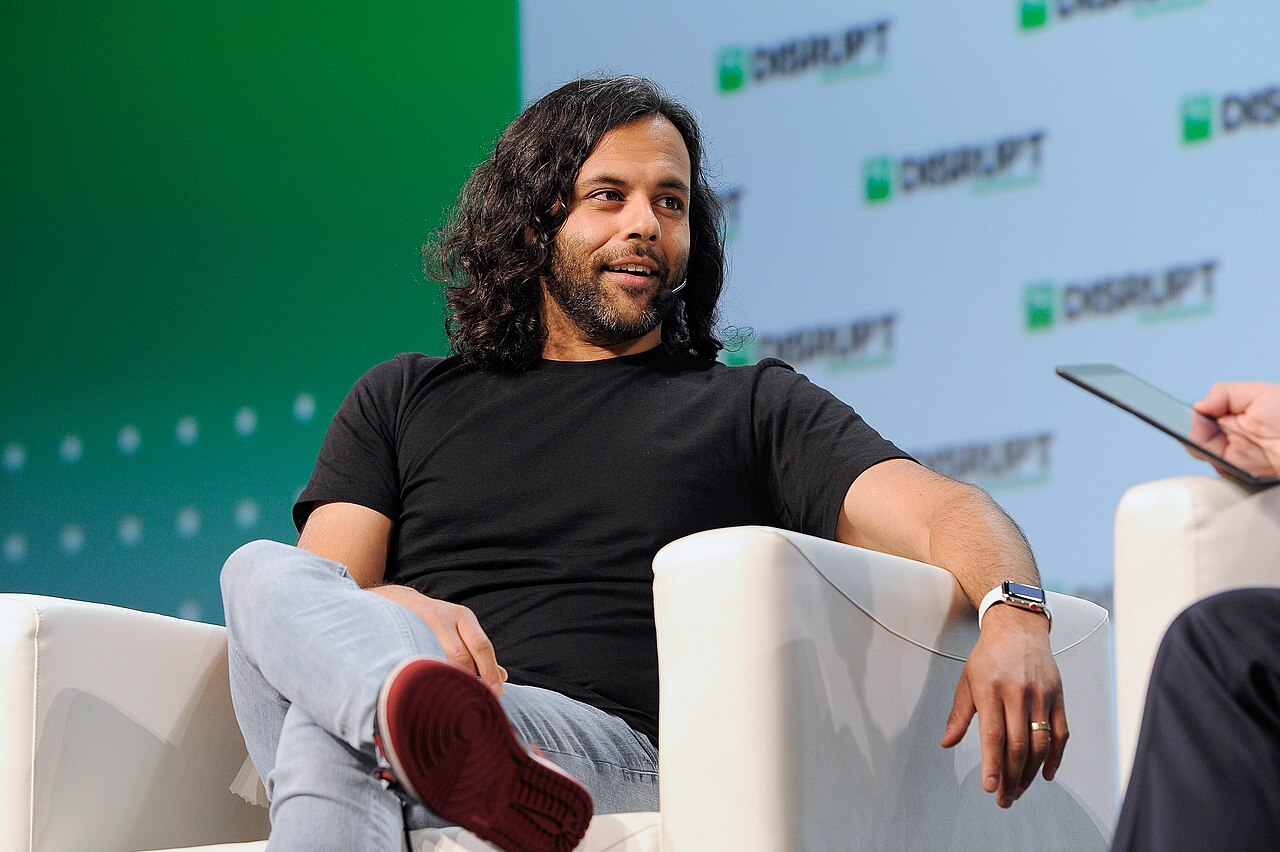
Watch or listen to the episode
The Space Technology That Could Change History Forever
Full original episode. Highlights below summarise the discussion; claims and opinions are attributed to the speakers.A plan to move computing infrastructure into orbit
In The Shawn Ryan Show episode “The Space Technology That Could Change History Forever,” host Shawn Ryan speaks with Cowboy Space founder Beju Bhatt about his company’s proposed orbital data centres. Bhatt presents the project as a possible way to expand computing capacity without drawing power, water or land from terrestrial communities, though the episode offers the company’s account rather than independent corroboration of its projections.
Bhatt says the planned constellation would comprise 20,000 satellites in sun-synchronous orbits, where near-continuous sunlight could support solar generation. Each spacecraft is intended to provide roughly one megawatt of peak power, creating a claimed total capacity of about 20 gigawatts. These figures describe Cowboy Space’s proposed system, not an operating network.
Big Iron turns part of the rocket into the satellite
The central design, called Big Iron, would use the rocket’s upper stage as the orbital data-centre satellite rather than discarding it after payload deployment. Bhatt says its solar arrays would unfold in orbit, while the fairing would open into radiators. The planned spacecraft would weigh around 15,000 kilograms, span more than a football field when deployed and carry several racks of computing hardware plus laser links for communications.
Cowboy Space also proposes giving components multiple roles to reduce mass. Residual ammonia used for electric propulsion would circulate as coolant, while pressurised tanks for cold-gas thrusters would help deploy the solar structures. Bhatt argues that eliminating separate radiators and other redundant hardware is essential to making orbital computing economically plausible.
A purpose-built rocket and early engine testing
Bhatt says limited and concentrated commercial access to orbit led Cowboy Space to design its own launch vehicle. The proposed 86-metre, stainless-steel rocket would burn liquid oxygen and methane, use nine Clydesdale engines on its reusable booster and one on the upper stage, and place about 15 metric tons into orbit. During the presentation, the company showed an early gas-generator test conducted at NASA Stennis; Bhatt acknowledged that part of the hardware failed during testing but described the result as useful data.
Ambitious dates meet major scaling risks
The company is targeting a full-engine hot fire around the middle of the following year and a first flight before the end of 2028. Bhatt explicitly says that schedule is not guaranteed and depends on many things going right. Longer term, Cowboy Space envisions launch sites with multiple pads and rockets departing minutes apart, but its cost and output figures remain company estimates.
Asked about the hardest problem, Bhatt points to coordinating technologies and capital across rockets, data centres, lasers, optics, solar power and finance. He also announces a proposed Big Iron Express service for third-party payloads, extending the project beyond the company’s own satellites. The conversation ultimately frames Cowboy Space’s biggest challenge not as one isolated invention, but as proving that all these systems can work together reliably and at scale.